Transavia focuses on personal impact with Light Flight Challenge
In 2025, Transavia will participate in SkyTeam's Aviation Challenge: an annual initiative in which airlines collaborate on innovation and sustainability. The 2025 theme is impact, and that's precisely what Transavia is all about: taking steps that make an immediate difference.
Various ideas to reduce the impact of flying were tested on a total of six flights from Amsterdam, Eindhoven, and Rotterdam to Faro. Transavia thus demonstrates how small actions can add up to a big impact.
Lower emissions by flying lighter
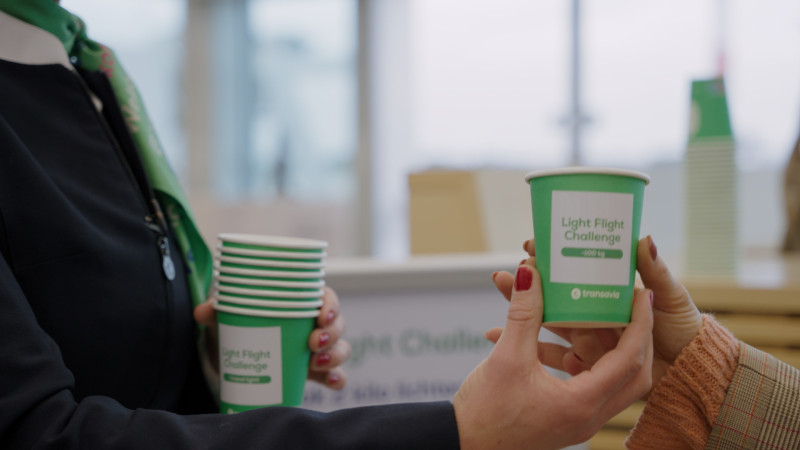
With the Light Flight Challenge, Transavia turned flying lighter into an awareness campaign for crew and passengers. Less weight on board means lower fuel consumption and therefore fewer emissions. The goal was to save at least one hundred kilos per flight and demonstrate that everyone can contribute by only taking what's absolutely necessary.
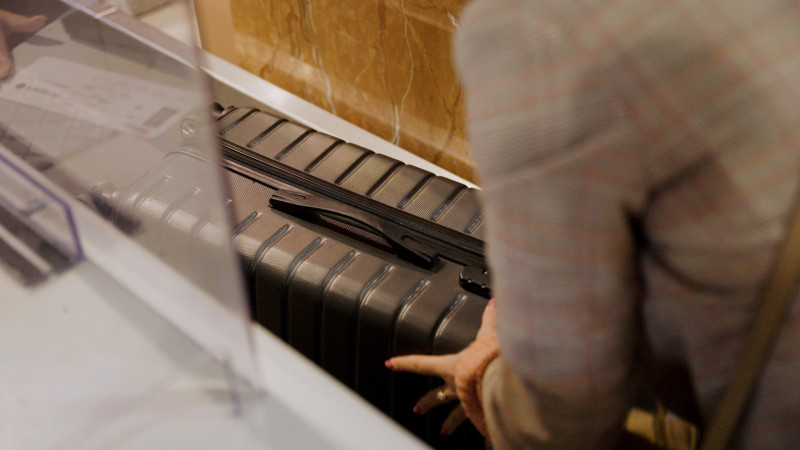
For example, Transavia challenged passengers to pack smarter, reducing their checked baggage by at least 2 kilos in exchange for a hot drink on board. The crew complied, taking only as much as necessary for their workday. Furthermore, they only used as much fuel as needed for the scheduled flight, within the required margins.
Kristina Palovicova, Innovation Expert at Transavia:
One hundred kilos lighter on an aircraft weighing between seventy and one hundred thousand kilos may not seem like much, but if Transavia carried 100 kilos less on all flights, it would save approximately 1.4 million kilos of CO₂ annually. Thanks to the joint effort, the target was easily met on every flight.
Fly smarter and waste less
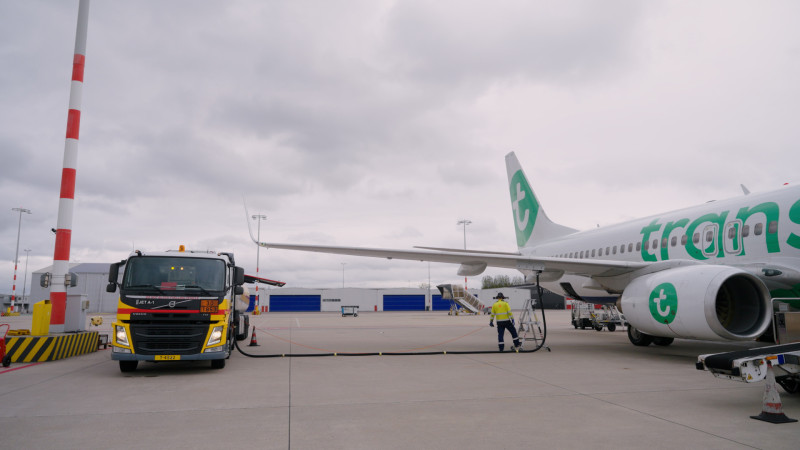
During the flights, the focus was also on initiatives that Transavia already uses but is continually improving. Pilots used OptiClimb, a technology that helps reduce fuel consumption during ascent. FliteDeck Advisor, an application that calculates the most efficient speed during each flight, was also deployed. This way, Transavia continues to work towards lower fuel consumption and therefore fewer emissions per flight.
Circularity also received extra attention. By better aligning its catering offering with demand and carefully separating waste in the cabin and cockpit, Transavia is reducing food and residual waste. On the six flights between the Netherlands and Faro, the waste recycling rate was 45%, 12% higher than the average for Transavia flights.
This press release was translated using automated tools. Please refer to the original Dutch version for the most accurate information.